GLP-1 Friendly Ground to Bottle Sip the difference

Rooted in Science. Grounded in Nature.

Discover the remarkable story of American elderberry and why this regenerative crop sits at the heart of LionBerry.

The Dark Berry

American elderberry has been called one of nature's most remarkable plants. Discover why this regenerative crop is gaining attention for its rich phytonutrients, deep roots, and potential to support healthier farms, healthier communities, and a healthier future.

Metabolic Recovery

Hydration, nutrition, gut health, and recovery are deeply connected. Explore how LionBerry was inspired by emerging conversations around metabolic wellness, healthy lifestyles, and the body's natural recovery pathways.

THE POWER BEHIND THE BERRY

American elderberry is more than a dark berry — it's a regenerative plant with deep roots, rich color, and a long history of traditional use.

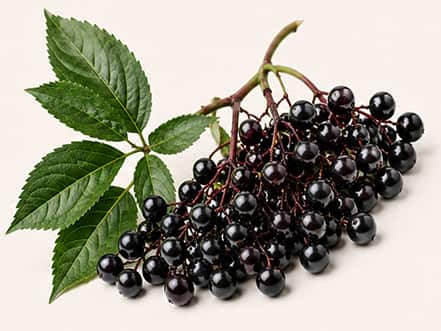
AMERICAN ELDERBERRY

Rich in anthocyanins, polyphenols, and natural plant pigments.
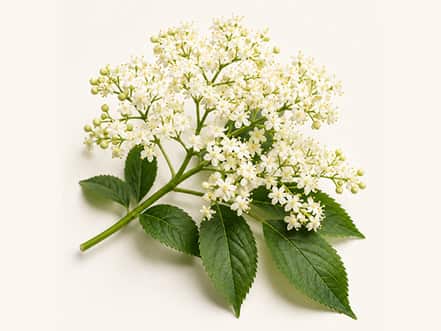
ELDERFLOWER

Traditionally used to support immune health and overall well-being.
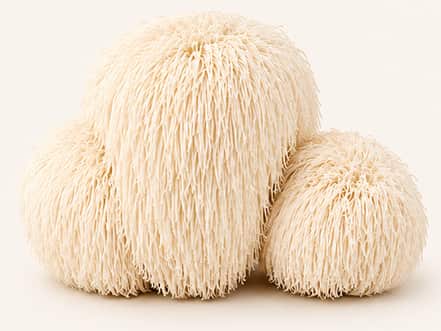
LION'S MANE

Traditionally used to support focus, mood, and clarity.
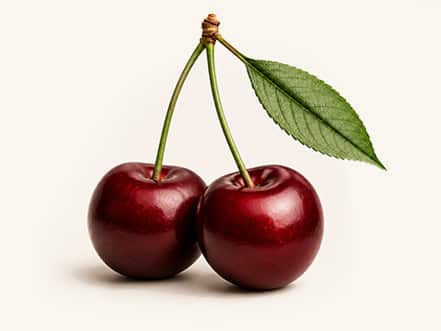
TART CHERRY

Known for polyphenols and recovery-supportive antioxidants.

ROOTED IN REAL INGREDIENTS. CRAFTED FOR CLEAN HYDRATION.

Elderberry & Lion’s Mane Drink with the goal of Brain & Immune Support

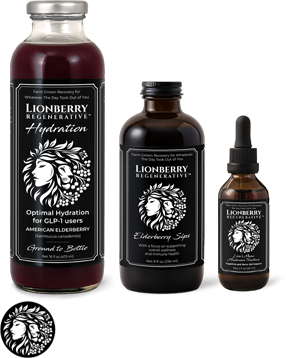
Lionberry is a small-batch elderberry and Lion’s Mane drink designed to support clean clarity and immune strength. Enjoy it cold for a refreshing, functional boost without the sugar crash.

Ground to Bottle

Sip the difference

  • Regenerative Hydration
  • Elderberry Sips
  • Lion’s Mane Tincture

REGENERATIVE
BY NATURE

Grown on real farms using regenerative practices that heal soil and support biodiversity.

ROOTED IN
COMMUNITY

We partner with small farms and communities to create a stronger, more resilient food system.

MADE WITH
PURPOSE

Every bottle is crafted with clean ingredients with commitment to your health and the planet.

FROM FARM
TO BOTTLE

Carefully crafted in small batches for uncompromising quality, purity, and taste.

The

Brain Bundle.

Save $20

every 3 Months!

  • 2 x 8oz Elderberry Sips
  • 1 x Lionsmane Mushroom Tincture

Shipped to your door.

State of the art facility at Myers Mushrooms processing and bottling Elderberry Sips, Elderflower Tea, Lion's Mane Mushroom Extract, and Lionberry Regenative Hydration Recovery Drink.
Experience the difference nature may help with. From brain health and immune support to clean, farm-grown hydration, Lionberry was crafted to help you think clearer, recover faster, and feel your best—without the junk found in typical drinks.

K-State Food Innovation Accelerator

The Food Innovation Accelerator at Kansas State University Olathe provides certified commercial kitchens and expert support for food entrepreneurs. It’s where Lionberry crafts and refines its small-batch, natural beverage products—leveraging state-of-the-art equipment and food-safety resources to ensure premium quality and consistency from concept to bottle.

They Paved Paradise

Lionberry 's Weekly Delusion and Re-illusion Update.

"They paved paradise and put up a parking lot."

That line has been rattling around in my head for years. I used to think it was about asphalt. I used to think it was a song about a woman looking at a lot where a garden used to be, shaking her head, feeling nostalgic. But the older I get, the less I think it's about pavement at all. I think it's about what we do to living things the moment we decide we're in charge of them.

Here's the pattern. We find something that's working. It's alive. It's productive. But it's messy. It's got rough edges. It grows in directions we didn't plan for and doesn't fit neatly into the blueprint we had in our heads. So what do we do?

Hatchet.

Axe.

Saw.

We trim it.

We square it up, level it, true it, plumb it.

We optimize it.

We standardize it.

We give it a name that sounds responsible, like "managerial containment," and we congratulate ourselves for bringing order to chaos.

Sometimes I wonder if we're just really, really good at domesticating things until they stop being alive. Not killing them outright — that would be too obvious, too easy to notice. Just quietly trimming away whatever made them unpredictable, until what's left is safe, symmetrical, and dead in every way that matters except the paperwork.

And maybe that's why the word "progress" has started to bother me.

Everybody talks about progress like it's automatically a good thing, like it's self-justifying, like the mere fact of movement settles the question of whether the movement is wise. But progress just means movement. It doesn't tell you anything about direction. Forward according to whom? Forward toward what? If you don't know what direction the thing is actually supposed to be going, then "forward" is just a word people use to make themselves feel better about motion they haven't examined.

I think that's why I've stopped trying to think in straight lines. Nature doesn't think in straight lines either. A wheel doesn't move forward, not really — it turns. A tree doesn't move forward — it grows, in every direction the light and water will allow, including down into the dark where nobody's watching. A mycorrhizal network, that vast underground web of fungal threads that connects trees to each other and shares nutrients between species that would otherwise be strangers or even rivals — it doesn't move forward either. It connects. It spreads. It shares. It has no destination, only relationship.

Maybe we've been using the wrong geometry this whole time. Maybe the right shape isn't a road stretching toward a horizon. Maybe it's closer to a wheel, turning in place but generating motion anyway. Or maybe it's not even a wheel. Maybe it's a vortex — a spiral where the center feeds everything else, where energy moves outward and comes back around, transformed, and nothing is ever really disconnected from anything else. That might be why I keep coming back to ecosystems as my mental model instead of assembly lines. An assembly line has a start and an end and a fixed number of stations in between. An ecosystem doesn't have an end. It just has cycles.

Now, don't get me wrong. I'm not romanticizing wilderness for its own sake, and I'm definitely not arguing for chaos. You can't just let Mother Nature run wild once you've already started interfering with her. The minute we build roads, plant fields, dam rivers, breed crops, or start businesses, we've entered the system as active participants. We've taken on responsibilities that a purely wild system never had to answer for. We have to manage what we've changed, because we changed it, and pretending otherwise is its own kind of arrogance.

I get that. I actually believe that pretty strongly.

But accepting responsibility for the systems we've touched doesn't mean everything has to become a parking lot. We can still leave places wild. We can still leave room for exploration inside the things we build. We can construct organizations — companies, teams, institutions — that have places where people are allowed to think like they're feral, without the whole structure collapsing into anarchy.

That's the question that won't leave me alone: why do we act like "wild" and "built" are opposites? Who decided that? Why can't a business be both organized and alive at the same time?

I want to be clear about something. I'm not anti-structure. I like organization. I like accounting, because numbers tell the truth even when people don't want to hear it. I like manufacturing, because there's something honest about turning raw material into something useful with your hands or your machines. I like governance, because somebody has to decide how disputes get settled before they turn into blood feuds. I like architecture, and economics, and the creative arts, and every other discipline that takes the formless and gives it a shape people can live inside.

I just don't think architecture has to mean pouring concrete over everything that used to be alive. There's a difference between building a foundation and paving over the topsoil.

The Octopus and the Elephant

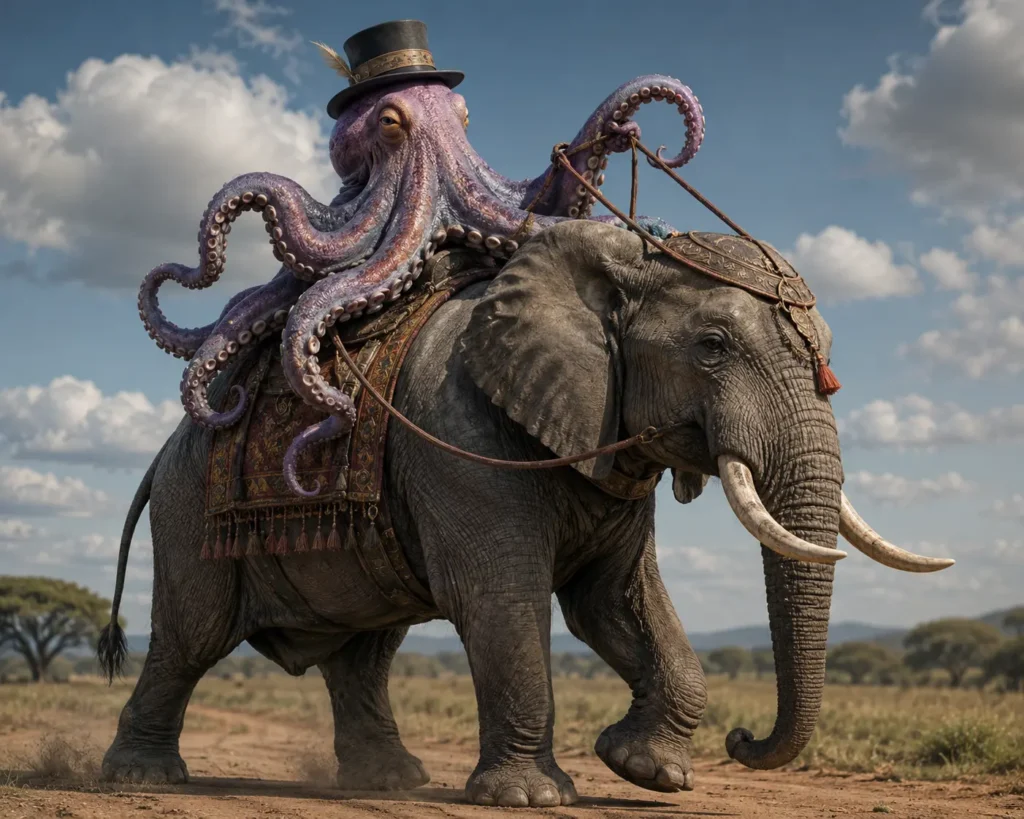
A few weeks ago I made an image of an octopus riding on the back of an elephant. I didn't make it because I had this whole essay figured out in advance. I made it because it felt right, in that half-conscious way that images sometimes arrive before the words that explain them. I just kept looking at it afterward, and the longer I looked, the more it started to unpack itself.

The elephant is the obvious one. She's carrying everything. She remembers. She's the roads that everybody forgot they were following, the paths worn smooth by generations of feet that knew, without needing to be told twice, where the water would be. She's infrastructure in the truest sense — not concrete and rebar, but the accumulated, embodied memory that a whole herd depends on to survive a drought nobody living has ever seen before.

But here's what finally hit me, staring at that picture: she's also a library. And it's not the kind of library where the knowledge sits on a shelf collecting dust until someone happens to check it out. When the matriarch knows where the water is during a drought, that knowledge isn't written down anywhere. It's not in a manual. It's walking around inside her, encoded in decades of lived experience, and she doesn't hand it over the week before she dies like some kind of deathbed briefing.

The daughters spend years beside her. Years. They're not being trained in a classroom. They're learning judgment by watching judgment get exercised, over and over, in situations that never repeat exactly the same way twice. They're learning timing — when to move the herd, when to wait, when the situation looks dangerous but isn't, and when it looks fine but isn't. They're learning what actually matters, as opposed to what merely looks urgent in the moment.

That's succession. Real succession. Not a three-ring binder sitting on a shelf. Not a Zoom call where someone screen-shares a slide deck. Not somebody saying, "Here's the SOP, good luck." The daughters are literally walking beside wisdom, day after day, year after year, until it stops being something they were taught and becomes something they simply are.

Then I look at the octopus, and it's a completely different game altogether.

The octopus has a brain in its head, sure, but most of its nervous system lives out in its arms — something like two-thirds of its neurons, spread across eight independently intelligent limbs. It's almost like the thinking happens wherever the work is happening, rather than being routed back to some central command post for approval first.

It doesn't just look at the world. It feels it. It tastes with its suckers. It changes color in a fraction of a second to match its mood or its surroundings. It changes texture, growing bumps and ridges to mimic coral or rock. It disappears when it needs to. It experiments constantly, trying things that have no obvious survival value except that trying things is, in itself, a survival strategy. It plays. It opens jars — that's literally what people give captive octopuses to keep them from getting bored, because an under-stimulated octopus is a genuinely unhappy animal. It squeezes through gaps that should be physically impossible for a creature its size, because it has almost no rigid skeleton to get in the way of its curiosity.

It's weird. Unbelievably weird. And somehow that weirdness is exactly why it survives. It isn't carrying hundreds of years of accumulated memory the way the elephant is. It's carrying possibility instead. It has no multi-generational archive to draw on, so it compensates by being radically, relentlessly responsive to whatever is true right now, in this exact moment, in this exact patch of reef.

The elephant wakes up asking, "What have we learned?"

The octopus wakes up asking, "What's true today?"

Now tell me why in the world I'd want either one of them running the whole company by itself.

If all I've got is elephants, we'll remember everything perfectly and eventually turn into a museum — beautifully preserved, meticulously cataloged, and completely incapable of noticing that the world outside the glass has moved on without us. If all I've got is octopuses, we'll generate brilliant, dazzling ideas constantly and still end up with nothing to show for it, because nothing ever gets carried forward long enough to compound into something larger than the moment it was born in.

I don't want one or the other. I want both, working together, each doing what it's actually built to do.

I don't want the octopus steering every step the elephant takes, second-guessing decades of earned trail knowledge because something shinier caught its eye. And I don't want the elephant making every decision for the octopus either, smothering its improvisational genius under the weight of precedent. I want the elephant to walk the trail she's spent a lifetime learning, with the confidence that only comes from having actually walked it before. And I want the octopus free-ranging around her, climbing over rocks, sticking an arm into holes nobody else thought to check, coming back again and again with information the elephant never could have found on her own, because she was never built to look there in the first place.

That feels healthier to me. It's the same instinct behind free-range livestock versus animals raised in a box. Free-range chickens are healthier than chickens raised under fluorescent lights in a cage barely bigger than their bodies, and it's not just about the meat quality or the ethics, though those matter too. It's that free-range animals get to express the behaviors they actually evolved to express — scratching, foraging, moving, choosing. They're participating in an ecosystem instead of merely existing inside a system that was designed around efficiency and nothing else.

I don't think people are all that different. Put a person in a role with no room to explore, no room to be a little bit weird, no room to follow a hunch down a hallway nobody asked them to walk down, and you get the human equivalent of a chicken in a box. Technically alive. Technically productive. Not actually thriving.

Crystals, Tar Pits, and Living Networks

Then I started thinking about the crystal and the mycorrhizae, because people keep asking me which metaphor I like better, as if I'm supposed to pick a side.

I don't think they're competing metaphors at all. I think they're describing the same underlying tension from two different angles. A crystal is beautiful. It's precise. Every atom locks into place according to a repeating structure that doesn't bend, doesn't improvise, doesn't grow toward the light. It's stable specifically because it's rigid. That rigidity is the whole point — it's what makes a crystal a crystal instead of a puddle. There's nothing wrong with that, in the right context. You want your load-bearing walls to behave like crystals. You do not want your culture to behave like one.

But then another thought hit me, and it stopped me for a second. Maybe the crystal isn't really the opposite of the mycorrhizal network. Maybe the true opposite — the cautionary version — is the fossil. Or better yet, the tar pit.

Tar pits are fascinating precisely because of how deceptive they are. From a distance, a tar pit looks like a still, calm pool of water. Animals wander toward it because it looks inviting, looks like relief, looks exactly like the thing they need. And then it closes over them slowly enough that by the time they realize what's happening, they're already trapped. What comes out the other side, tens of thousands of years later, isn't a living creature anymore. It's a perfect record. An extraordinarily detailed, scientifically priceless, completely dead record.

That's what happens to organizations that mistake preservation for life. They stop being systems that grow and start being systems that merely remember. Every process gets documented so thoroughly, every decision gets so heavily precedented, that eventually the organization isn't actually doing anything anymore — it's just very, very good at recording what it used to do. It's a beautiful fossil. It is not a forest.

The mycorrhizal network is the opposite of the fossil, not the opposite of the crystal. It's alive in a way that never stops moving, never stops redistributing resources to wherever they're needed most, never stops connecting parts of the system that would otherwise have no reason to talk to each other. A tree that's struggling gets nutrients routed to it from a healthier neighbor, through fungal threads too small to see, and nobody put that redistribution on a calendar. It just happens, because the system is alive enough to notice the need and alive enough to respond to it.

What This Has to Do With AI

The deeper question underneath all of this isn't whether AI is going to replace humanity. That's the headline version, the version that gets clicks, but I don't think it's actually the right question.

The right question is why we automatically assume that every new capability requires replacing the one that came before it. That's the pattern I keep circling back to, over and over, in every domain I've mentioned so far.

Wildness becomes management.

Judgment becomes procedure.

Trust becomes transactions.

Participation becomes preservation.

Exploration becomes optimization.

Every single time, we take something alive and messy and responsive, and we quietly convert it into something safe and legible and dead. Not maliciously. Usually with the best of intentions. We just keep mistaking the trimmed, tidy version for progress, because it's easier to measure, easier to defend in a meeting, easier to put on a slide.

Now we're asking whether AI should replace people, and I think we're about to make the exact same mistake we've made with everything else, just faster and at a much larger scale.

I don't think evolution actually works by replacement most of the time. It works by layering. New capabilities get added on top of old ones far more often than old ones get discarded wholesale. We didn't lose our reptilian brainstem when we developed a prefrontal cortex — we built on top of it. The new capability didn't erase the old one; it gave the old one new company.

AI can be a prosthetic instead of a substitute, if we're deliberate about building it that way. A prosthetic doesn't replace the person wearing it. It extends what that person is already capable of doing, compensates for a specific gap, and leaves everything else about them intact. That's a fundamentally different design goal than building something meant to stand in for a person entirely.

So the real design question, the one I actually care about, isn't "how do we build something that replaces the elephant and the octopus?" It's: how do we build systems that preserve life instead of replacing it? How do we add capability without extinguishing the living system that made that capability possible in the first place?

I don't want AI to replace the elephant's memory. I want it to help her remember more, and remember it more clearly, across more terrain than one matriarch could ever personally walk in a single lifetime. I don't want it to replace the octopus's curiosity either. I want it to help the octopus explore farther, reach into more holes, taste more of the reef, without losing the improvisational instinct that makes an octopus an octopus in the first place.

That's a completely different relationship than simply handing over the reins and walking away. It's not abdication. It's partnership, with all the friction and negotiation that real partnership actually requires.

We've been paving paradise for a long time now, and calling it prog